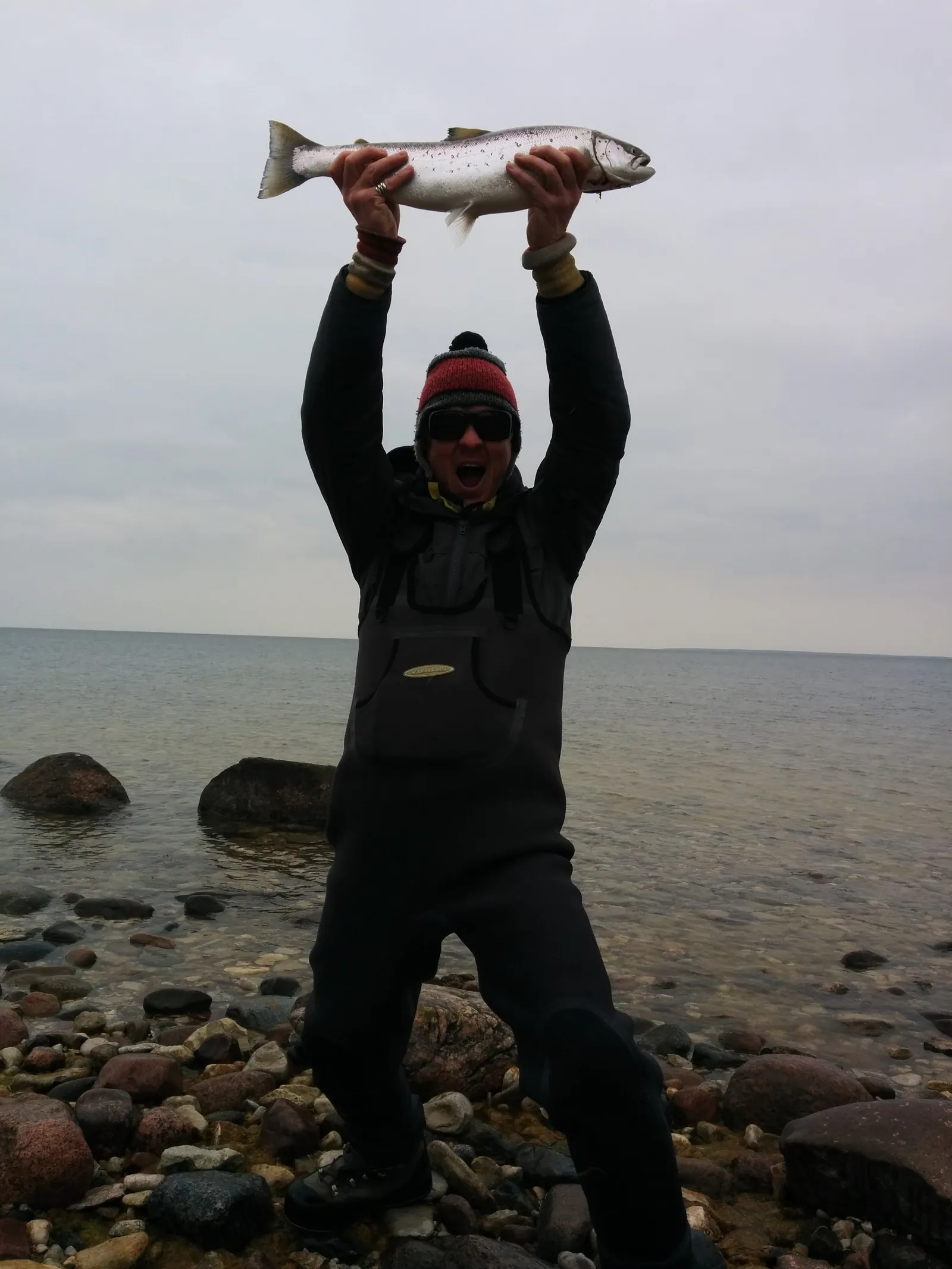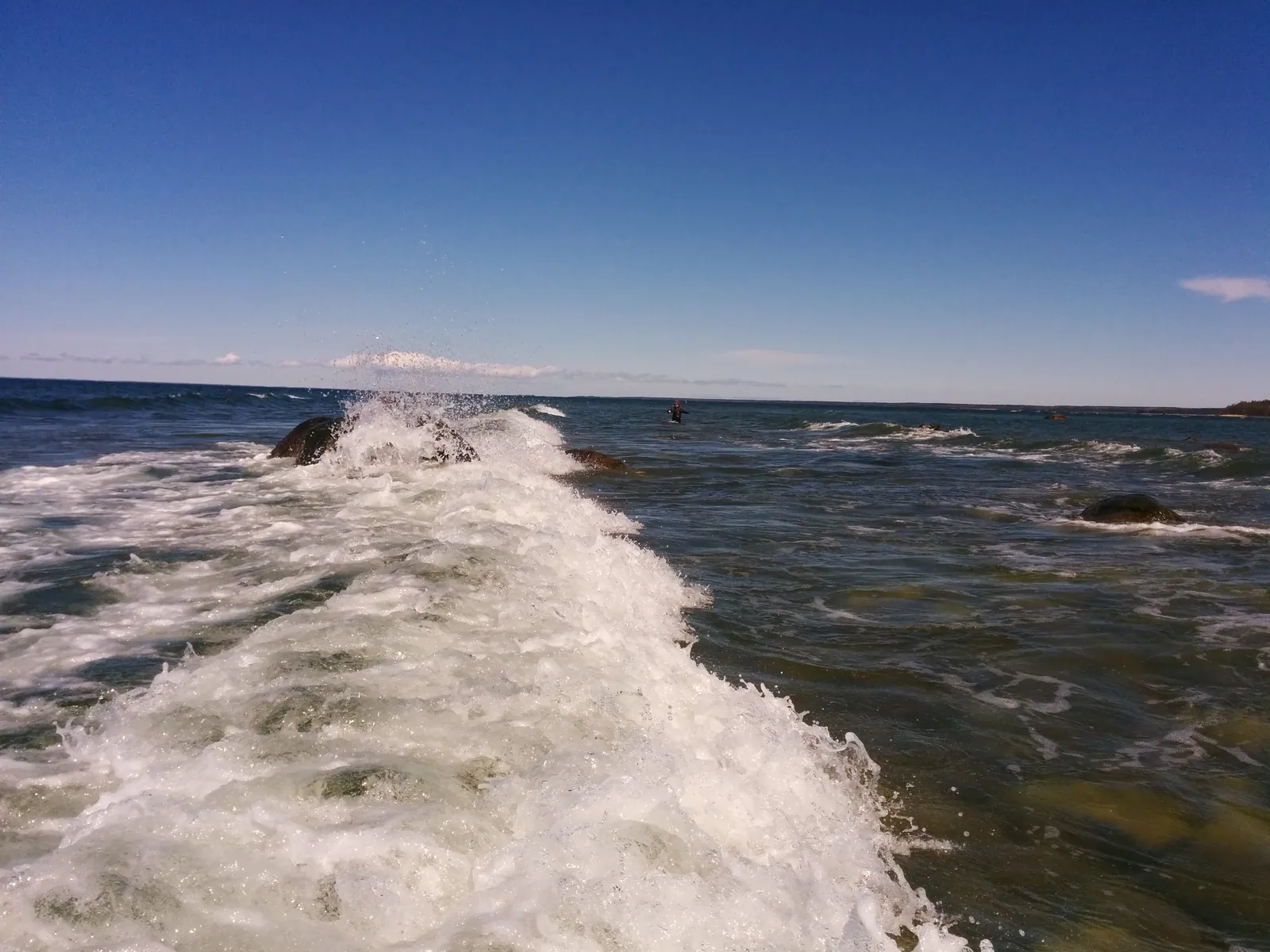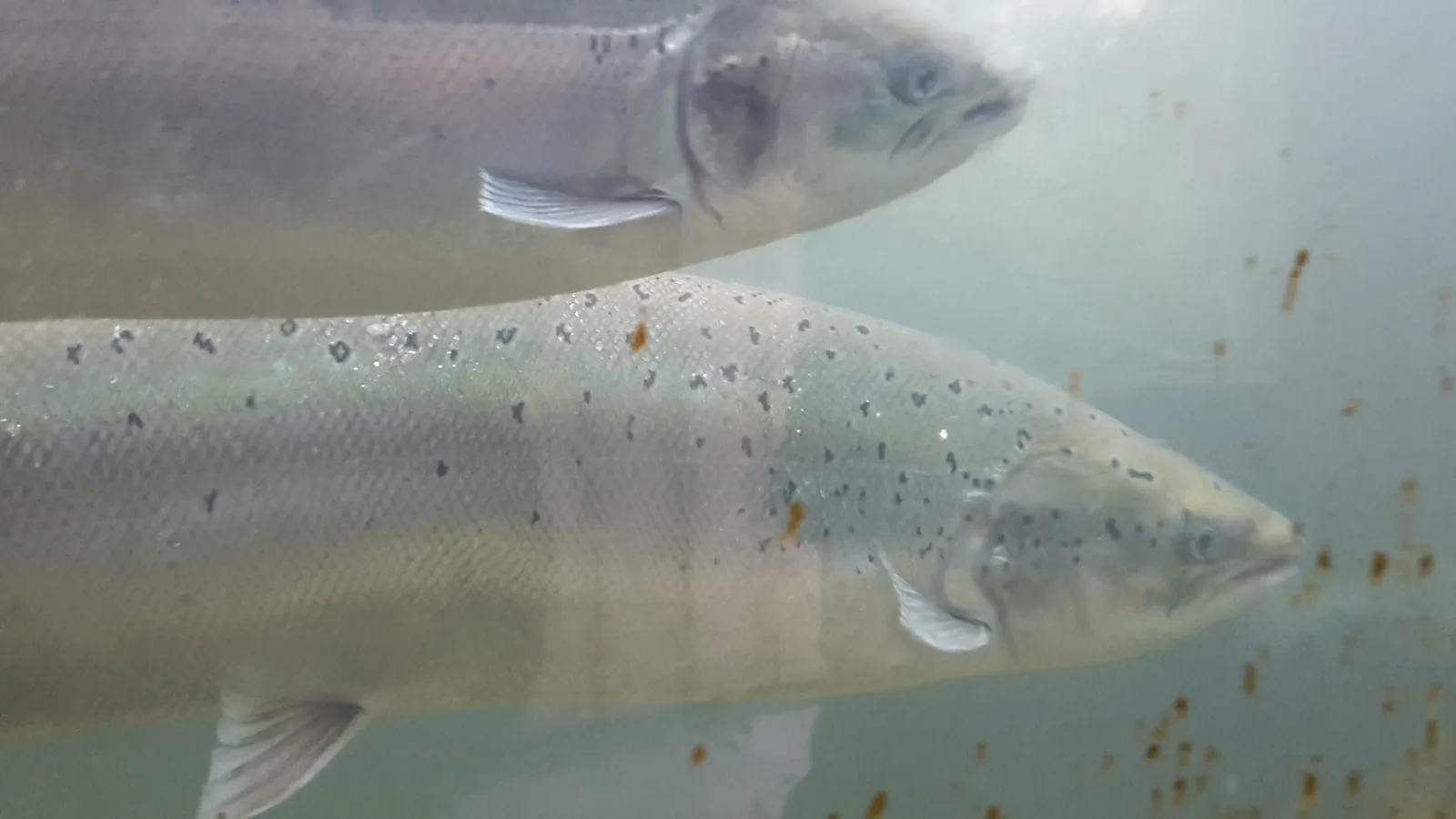
The sea trout is the same species as the brown trout — Salmo trutta. The difference is its way of life: the sea trout migrates to the sea, grows bigger there and comes back to the river to spawn. That migration is what makes it such an exciting and precious fish.
Born in the river
It all begins in a small river or stream. In autumn the female digs a nest in the gravel bed and lays her eggs there. The eggs spend the winter among the stones, and the fry hatch in spring.
Young fish usually live in the river for one to several years. They need clean, oxygen-rich water and a gravel bottom. That is why every clean stream matters to sea trout.
Smolting — getting ready for the sea
One spring the young fish turns more silvery and prepares for saltier water. This is called smolting. Then it migrates down the river to the sea.
Life at sea
At sea, sea trout grow quickly. They feed on amphipods, shrimp, worms and small fish. Many fish stay quite close to the coast and feed exactly where we fish for them while wading.
Their size varies. Every now and then, very big fish are caught off the Estonian coast as well.
Coming home
Fish that are ready to spawn find their way back to the river where they were born. In autumn they move into the river mouths and up the river. After spawning, many fish drop back down to the sea — thin and exhausted. These are called kelts. Some fish also skip a spawning year.
What this means for the angler
- Autumn closed areas and closed seasons near river mouths exist so that spawning fish can get on with their job. Respect them.
- Kelts in spring are thin and need to recover — release them.
- The minimum size gives a young fish the chance to spawn at least once.
- Clean rivers are the future of sea trout. Every river and stream restoration helps us all.
The better you know the fish's life, the better you will be at finding it — and protecting it. If you'd like to talk more about this on the coast, come on a guided day.