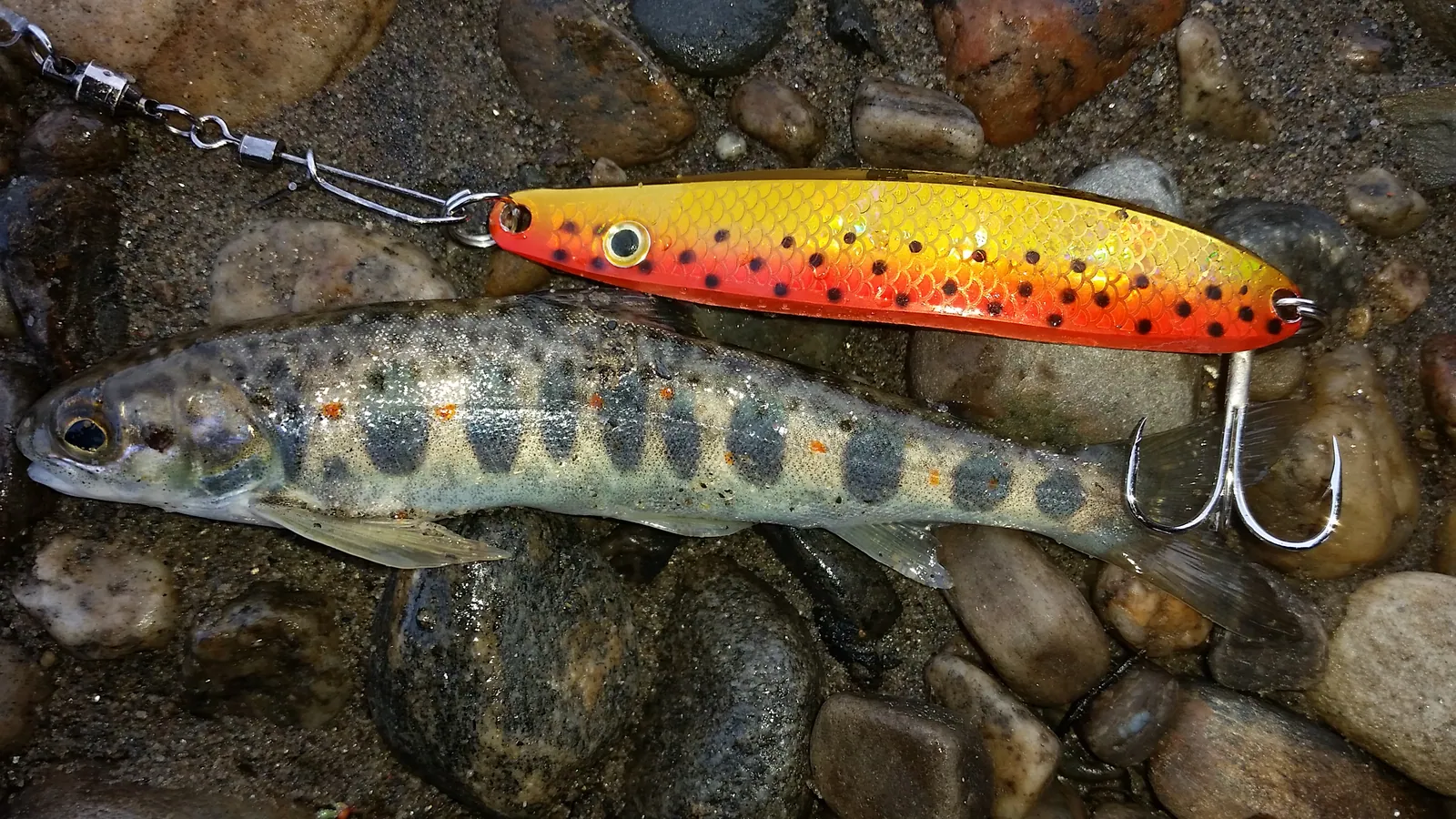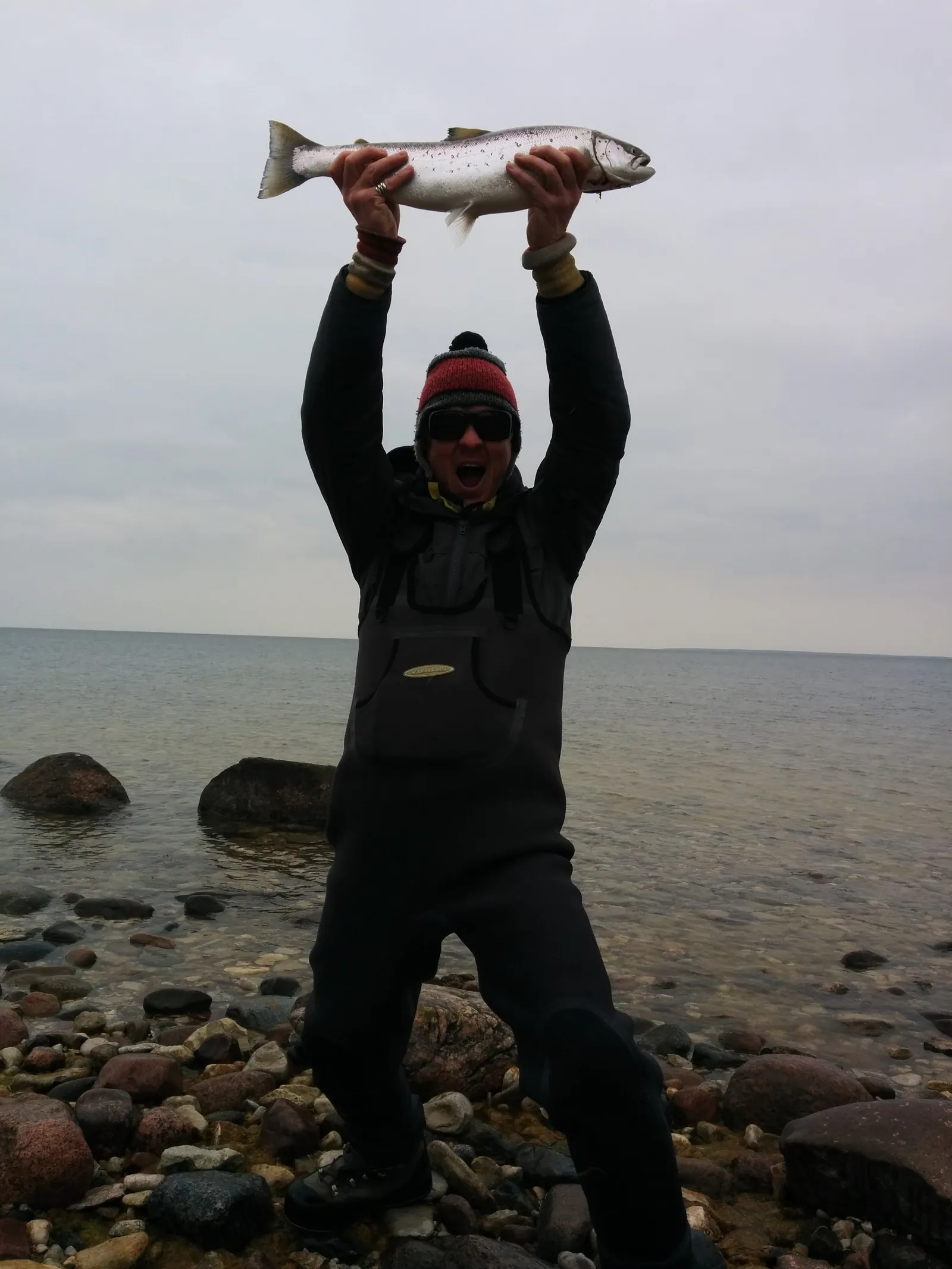
As the saying goes: roach fishing is primary school, pike fishing is high school, trout fishing is university. Sea trout are not fish that jump onto the hook by themselves. They are wary, they move about a lot, and you have to walk the coastline to follow them. But that is exactly why your first one is so memorable.
Here are ten things I recommend every newcomer knows before their first day on the shore.
1. The fish aren't everywhere
Sea trout look for food and cover. You will find them where there are rocks, beds of bladderwrack, a sudden change in depth or a current. Even, sandy bottom with no structure is usually empty. Before you cast, study the shoreline: where the water changes colour, the bottom changes too.
2. Keep moving, don't stand still
Coastal fishing is walking. Make two or three casts in a fan, take a few steps along and repeat. If you stand in one spot for hours, you will most likely catch nothing but wind.
3. A short cast is often better than a long one
Beginners want to cast as far as possible. But sea trout often come in to feed right by the shore — in knee-deep water. Make your first casts parallel to the shore, and only then go further out.
4. Water temperature is the key
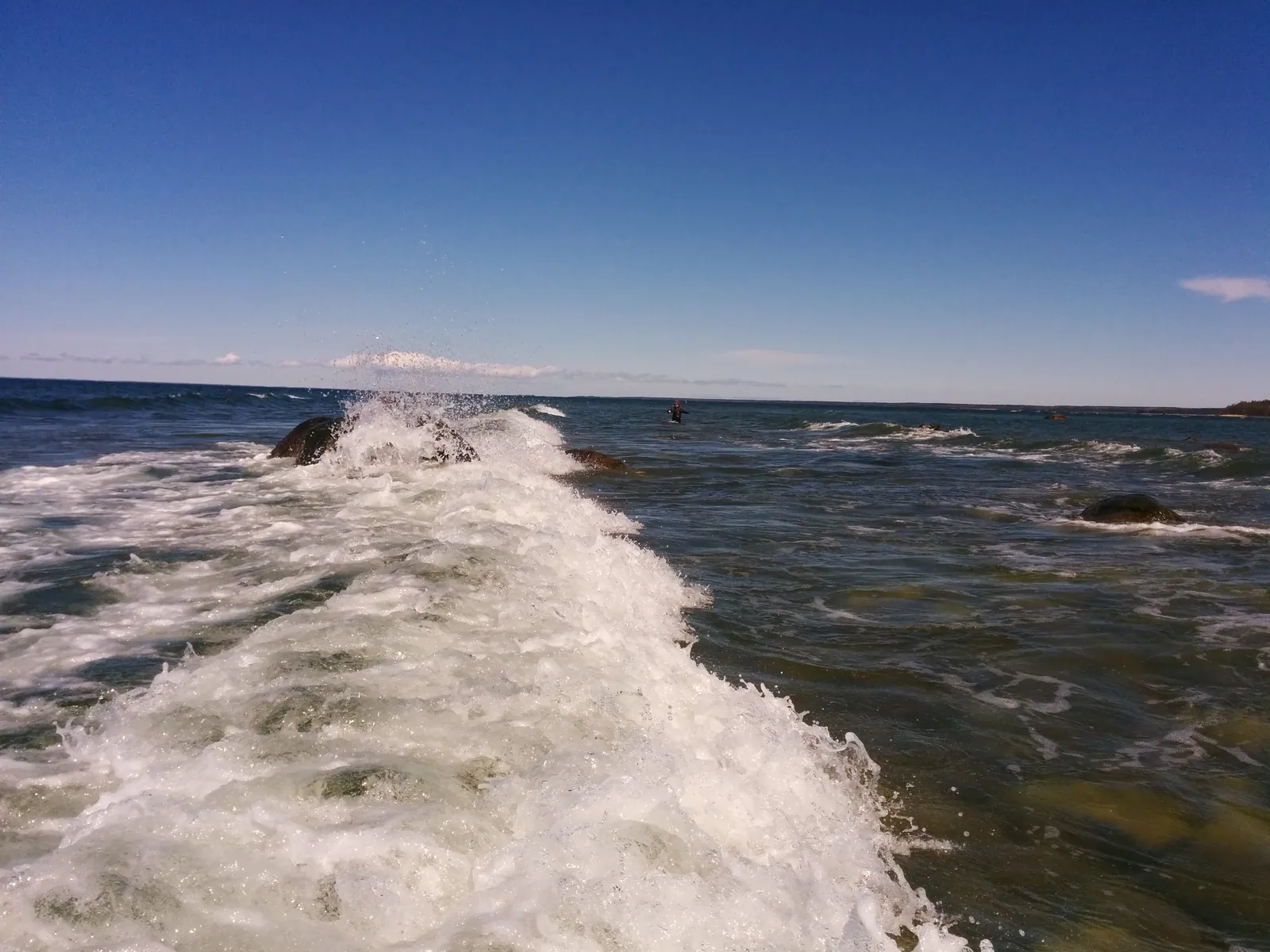
Sea trout like cool water. The liveliest time is usually spring and autumn, when the coastal water is cool but not ice-cold. In summer the fish move deeper and tend to come inshore at night or early in the morning.
5. The wind is not your enemy
A moderate onshore wind pushes food towards the shore and colours the water — that gives the fish confidence. Too strong a wind, however, makes fishing dangerous and casting impossible. Read more about it in the post Wind, waves and water temperature.
6. Gear doesn't have to be expensive, but it has to be right
To start with, a spinning rod of around 2.7–3 m, a 3000–4000 size reel and braided line or monofilament are enough. And of course waders. If needed, I can also arrange extra gear for the guided day.
7. Slow down
The most common mistake is retrieving the lure too fast. Try different speeds, pause, let the lure sink. Every day is different, and the fish will tell you what they want today.
8. Follow the rules
Before fishing, check the current fishing regulations: fishing licence, minimum size, daily bag limit, and closed areas and seasons around river mouths. They change from time to time, so don't rely on what you knew last year.
9. Be ready for a blank day
Even the best anglers blank sometimes. Sea trout fishing is constant learning — you are never finished. Every blank day teaches you something about the wind, the water and the spots.
10. Learn from someone who catches fish
This is the shortest route. Fish where and when the people who catch fish are fishing. One day with an experienced guide can save you a whole season of searching.
The most important thing is to come, wade and pay attention. The fish will come when you are ready.
If you'd like to spend your first sea trout day with me, see the guided day details.