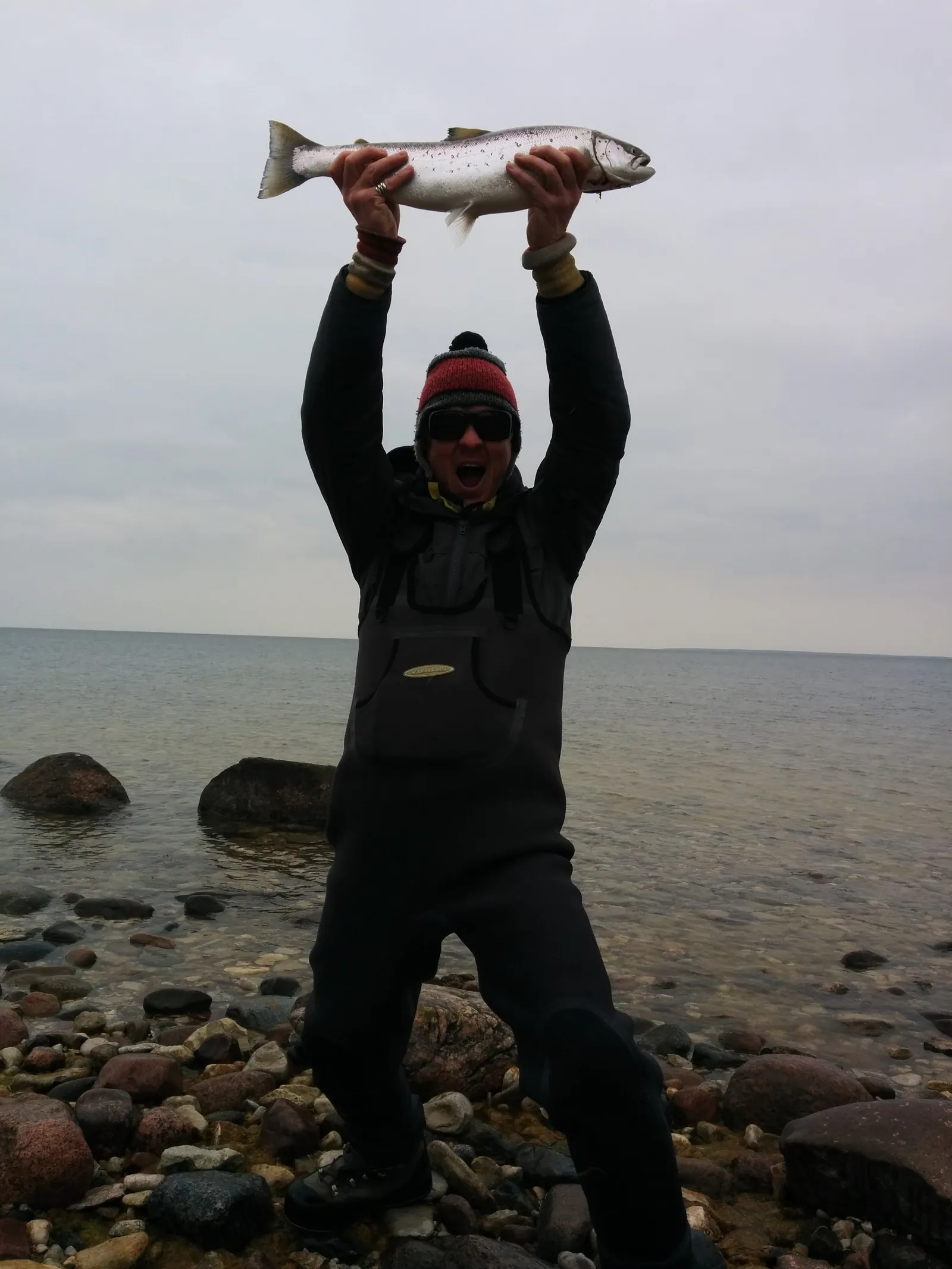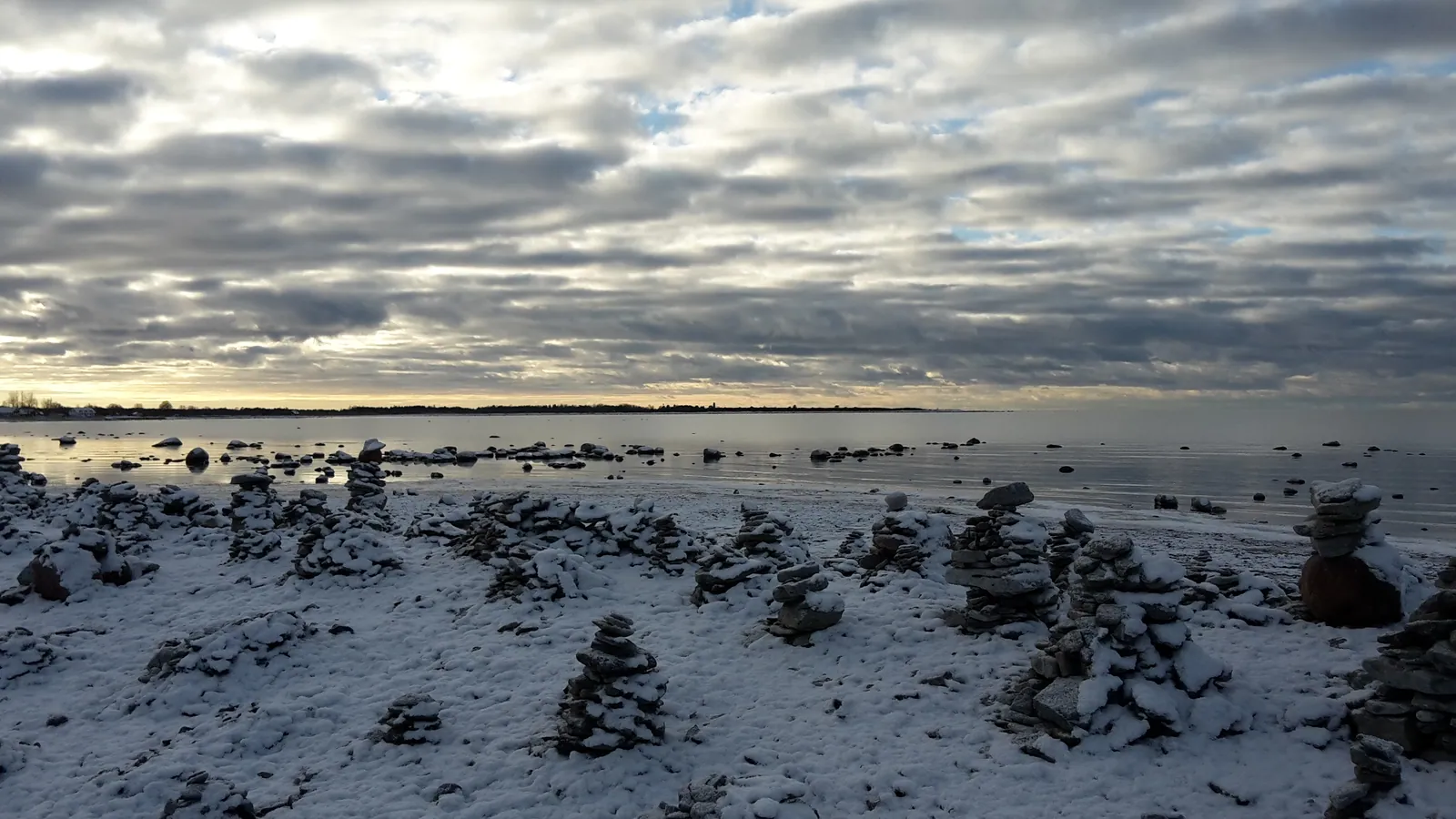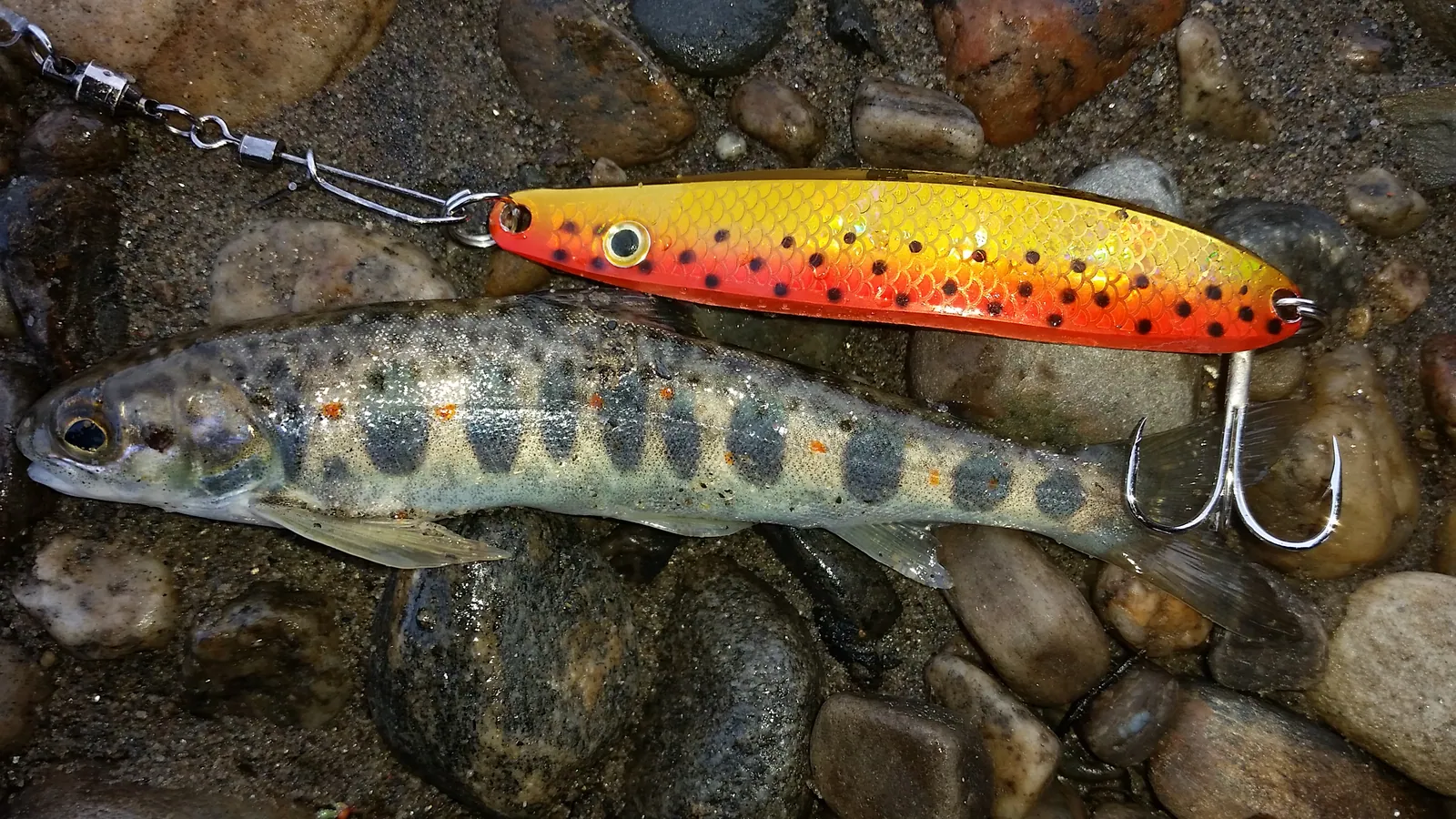
After our day together, one client wrote to me: “Now we keep a close eye on the wind, the currents, the temperature and the shape of the seabed — our world has opened up considerably.” And that is exactly what sea trout fishing teaches you. The fish are not random. They behave according to what the sea is doing.
Onshore or offshore wind?
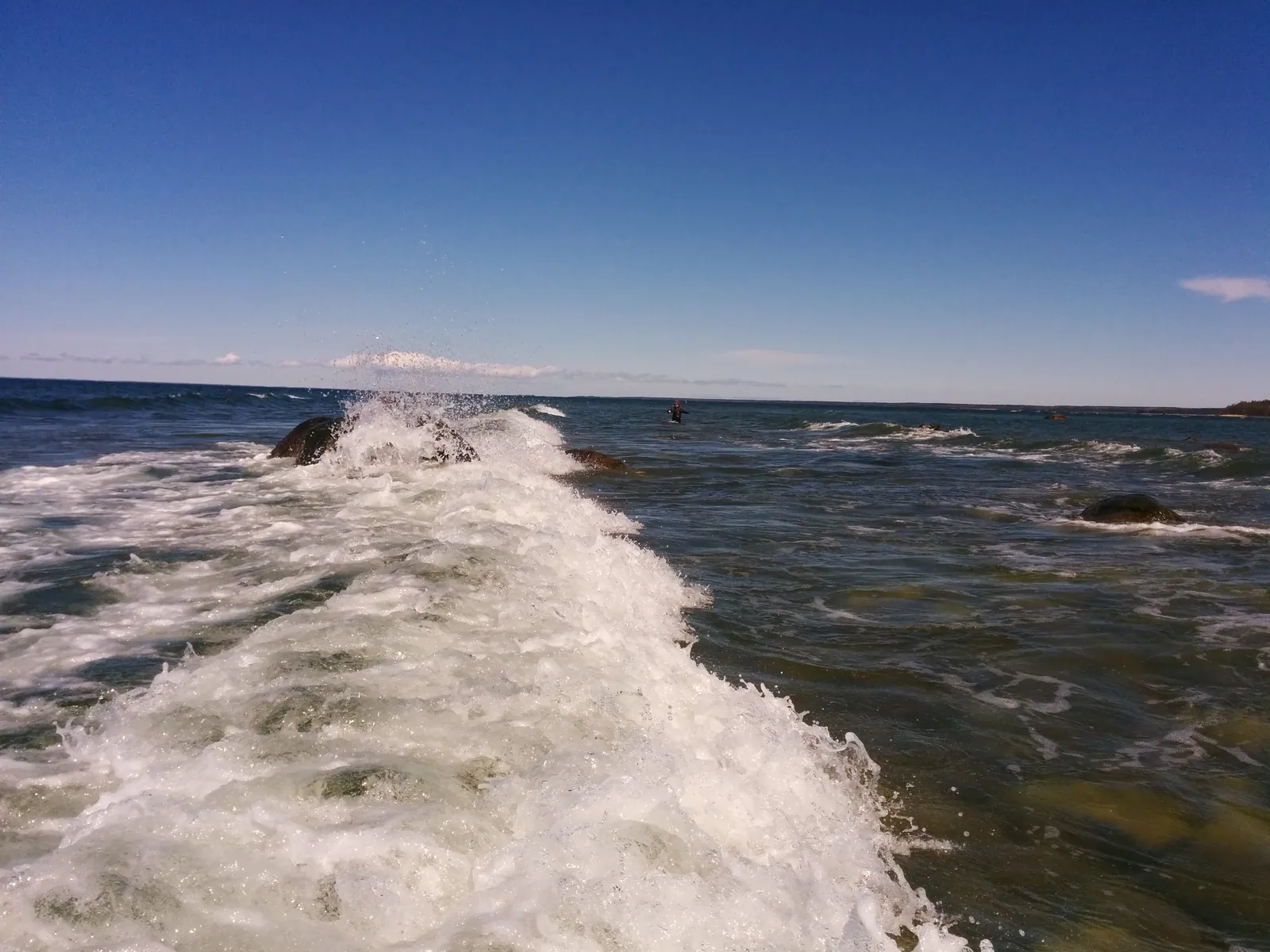
An onshore wind (blowing from the sea towards the shore) brings food inshore — small fish, amphipods and other life. The waves colour the water and the fish feel bolder. A moderate onshore wind is the best situation on many beaches.
An offshore wind (blowing from the shore out to sea) flattens the water along the shore and pushes the surface water away. In summer this can bring cooler, deeper water inshore. Casting is easy, but the fish are more cautious in clear water.
A crosswind creates a current along the shore. In places with current, by headlands and rocky shoals, food gathers — and the fish with it.
How much wind is too much?
When the waves break so that you can't stand securely, or when your line no longer stays in the water, it's time to change beaches. In dangerous winds or a thunderstorm, simply call off the fishing. No fish is worth it.
Water temperature
Sea trout like cool water. In spring, look for places where the sun has already warmed the water a little. In summer, look for cooler water — either deeper, or in places where the wind has brought in colder water. In autumn, as the water cools, the fish come closer to the shore again.
Water clarity and light
- Clear water and bright sun: fish early or late, use more natural colours and a finer leader.
- Coloured water and overcast weather: the fish are bolder, you can use brighter lure colours and fish in the middle of the day.
- Dusk: often the liveliest time of the day.
The seabed
Look at the beach from higher up — from the top of the bank, from a headland, on a map or on a satellite image. Dark patches in the water are rocks and bladderwrack, light ones are sand. The edge between dark and light is where sea trout often feed.
Putting it together
Before you go fishing, check the weather forecast and ask yourself:
- Where is the wind blowing from, and how strong is it?
- Which beach benefits from this wind but is still safe?
- What are the water temperature and clarity like?
- Is there structure — rocks, bladderwrack, a change in depth?
These four questions are worth more than any new lure. On a guided day we read the sea together — find out more.